
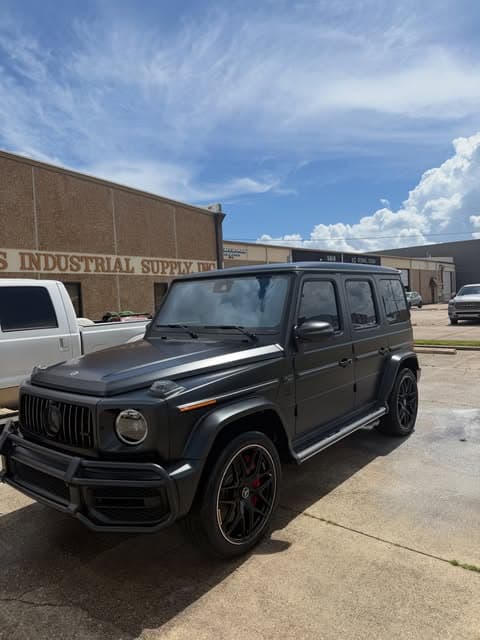
A coating rated for five years is rated in a lab, not on the Gulf Coast. South Louisiana puts a specific set of stresses on a finish that most manufacturer claims never account for, and knowing them is the difference between a coating that lasts and one that quietly stops beading in eighteen months.
What actually wears a coating down here
UV is the obvious one, and it matters — but the things that shorten a coating around New Orleans are mostly chemical and mostly seasonal.
- Love bugs. Their remains are acidic, and left on hot paint through a summer afternoon they will etch a coating, not just sit on it. Removing them the same day matters more than which coating you bought.
- Pollen, twice a year. It holds moisture against the surface, and when it is washed off with a dirty mitt it becomes an abrasive.
- Industrial fallout. Anywhere near the river or the refineries picks up iron particles that embed and rust in place.
- Heat plus humidity. Water that would evaporate cleanly elsewhere sits, and mineral-heavy water spots bake into the surface.
- Automatic car washes. The single fastest way to ruin a coating. Spinning brushes put swirls straight into the coating layer.
What five years actually means
A five-year coating is a claim about the chemistry's durability under normal maintenance, not a promise that it will look new for five years without help. Realistically, on a car parked outside in this climate and washed properly, expect strong hydrophobics for the first two to three years and continued protection and gloss beyond that, with the beading gradually relaxing.
A car that lives in a garage and gets a correct wash every few weeks will hold its performance markedly longer than the same coating on a daily driver parked under a tree in Mid-City. The variable is almost never the product.
How to make it last
- Wash every two to three weeks, more often in pollen season, using two buckets and a clean mitt.
- Get bugs and bird droppings off the same day. This is the highest-value habit there is.
- Skip automatic washes entirely. If you are travelling, a touchless wash is a compromise; a brush wash is not.
- Dry with a clean plush towel or filtered air rather than letting hard water evaporate on the panel.
- Have the coating inspected once a year. A decontamination wash and a topper can reset the surface behaviour for a fraction of a recoat.
The prep is what you are paying for. A coating locks in whatever is underneath it — including swirls. That is why a proper coating job includes paint correction first, and why a cheap coating over uncorrected paint is worse than no coating at all.
Is it worth it here?
For a car you intend to keep, or one with dark or soft paint, yes — largely because of what it prevents rather than how it looks on day one. Etching from bugs and bird droppings is the most common irreversible damage we see on Gulf Coast paint, and a coating is the cheapest insurance against it. For a lease you are handing back in two years, a ceramic wax or sealant gets you most of the surface behaviour for far less.